01-July-2026
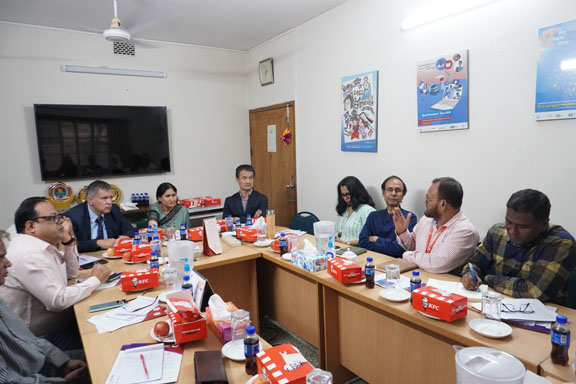
CAMPE organized a high-level consultation between representatives of leading CSOs and the visiting GPE Mission on 1 July 2026 at the CAMPE Conference Room in Dhaka. The dialogue provided a strategic platform to discuss Bangladesh’s education reform priorities, the implementation of the GPE Partnership Compact, and opportunities to strengthen collaboration among the Government, development partners, and civil society to accelerate sustainable and equitable education transformation.
The consultation took place at a critical juncture as Bangladesh advances its 12-Point Education Reform Agenda while preparing to implement the GPE System Transformation Grant (STG) and Multiplier Grant. Discussions focused on how these investments can support national reform priorities, improve learning outcomes, strengthen education governance, and address persistent inequalities across the education sector.
As Bangladesh’s largest civil society network working on education, CAMPE welcomed the Government’s commitment to comprehensive education reform, including improving foundational learning, strengthening teacher development, reforming curriculum and assessment, expanding Technical and Vocational Education and Training (TVET), promoting STEM education, enhancing governance, and increasing investment in education.
Participants also welcomed the Government’s initiative to develop a Government–NGO Collaboration Framework, recognizing it as an important step toward institutionalizing meaningful partnerships between government and civil society. They emphasized that such a framework would strengthen evidence-based policymaking, improve implementation, enhance transparency and accountability, and ensure that reforms are responsive to the needs of learners and communities.
The GPE Mission reaffirmed its commitment to supporting Bangladesh’s education reform through strategic investments that strengthen education systems, improve governance, and deliver better learning outcomes. The Mission highlighted that the System Transformation Grant (STG), implemented by UNICEF and UNESCO, together with the Multiplier Grant, managed by ADB, presents a significant opportunity to address Bangladesh’s foundational learning crisis and advance implementation of the GPE Partnership Compact. GPE representatives stressed that lasting reform will depend on strong government leadership, coordinated action among stakeholders, evidence-based implementation, and meaningful engagement of civil society throughout the reform process.
Civil society representatives reaffirmed their readiness to serve as strategic partners in implementing the Government’s reform agenda. They emphasized the vital role of CSOs in community mobilization, policy advocacy, promoting equity and inclusion, strengthening social accountability, and ensuring that national reforms effectively reach marginalized and disadvantaged learners.
Participants also acknowledged that, despite Bangladesh’s remarkable progress in expanding access to education, improving learning quality remains an urgent national priority. They highlighted the need for increased public investment, noting that the proposed FY2026–27 education allocation of approximately 2% of GDP remains well below internationally recommended benchmarks. Stronger domestic financing, complemented by effective utilization of GPE resources and coordinated partnerships, was recognized as essential for achieving Sustainable Development Goal 4 (SDG 4).
To maximize the impact of GPE support, civil society representatives identified the following priorities:
• Institutionalize CSO participation in education planning, implementation, monitoring, and policy review through the proposed Government–NGO Collaboration Framework.
• Prioritize teacher professionalization through strengthened pre-service education, Continuous Professional Development (CPD), and improved career pathways.
• Strengthen coordination among government ministries, development partners, and education stakeholders to ensure effective implementation of the Partnership Compact.
• Promote inclusive governance by recognizing CSOs as strategic partners in policy dialogue, community engagement, evidence generation, and social accountability.
• Increase targeted investment for children from marginalized and disadvantaged communities, including children with disabilities, street and working children, ethnic minorities, and learners in geographically hard-to-reach areas.
• Revitalize the Education Local Consultative Group (ELCG) as an effective platform for policy dialogue, coordination, and mutual accountability.
• Leverage CSO networks to support community awareness, identify out-of-school children, accelerate learning recovery, and strengthen education monitoring.
• Allocate dedicated GPE resources for CSO-led initiatives on policy advocacy, citizen engagement, transparency, and independent monitoring.
• Foster stronger multi-stakeholder collaboration to support learning recovery and the localized implementation of national education reforms.
The consultation concluded with the hope that stronger partnerships, increased investment, inclusive governance, and shared accountability will help deliver quality, equitable, and inclusive education for every learner while accelerating Bangladesh’s progress toward Sustainable Development Goal 4 (SDG 4).